Swimming in November: what makes a pool usable all year round?
Most heat loss in an open pool happens through the water surface at night and in wind‚ so shade‚ windbreaks‚ covers‚ heating and enclosures set the season.
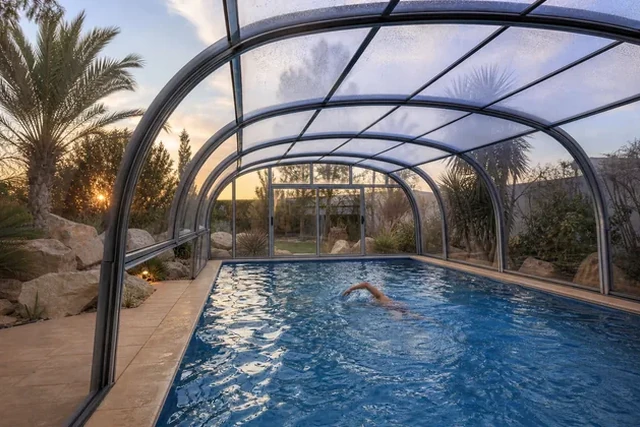
To understand how to extend the season‚ you first need to understand where the heat goes. Most of the heat lost from an open-air pool escapes through the water surface‚ mostly at night and mostly when the wind is blowing. Water that warmed up during the day loses much of the heat it gathered on a cold night‚ and the next morning the sun has to start almost from scratch. That is why telescopic or fixed swimming pool enclosures have in recent years become an option considered not only by hotels and community centers but also by private homeowners. But an enclosure is only one of several factors‚ and it is worth knowing all of them before deciding what to invest in.
The Sun‚ the Shade and the Pool's Location
A pool that gets direct sun for most of the day warms up far more than one partly shaded by the house or by trees. In winter the sun is lower‚ and the shadow of a wall or a tall tree grows longer and covers more of the water. It is worth tracking the shadow for one autumn day and checking how many hours of direct sun the water actually gets. Sometimes trimming one tree or moving a pergola changes the picture. The pool's color matters too‚ because a dark finish absorbs more heat than a white or light blue one‚ although the effect is more modest than people tend to think.
Wind Is the Silent Enemy
Wind blowing across the water increases evaporation‚ and evaporation is the most effective way for a pool to lose heat. In open areas‚ and especially in the desert‚ a steady evening wind can cool the water by several degrees in a single night. Anyone getting out of the water feels it too‚ because the wind chills a wet body and shortens the time people stay outside. A hedge‚ a glass wall or side panels on the side the prevailing wind comes from can greatly improve comfort‚ even before you get to heating solutions. Ask your neighbors which direction the evening wind comes from‚ because it does not always arrive from the direction that seems logical.
Covers‚ Heating and Enclosures
The simplest step is a thermal cover spread over the water at night‚ which prevents much of the heat loss and evaporation. It is relatively cheap but takes daily discipline to spread and fold. A heat pump or a solar system can raise the water temperature by several degrees and extend the season by two months or more‚ with running costs that depend on the size of the pool and how well it is insulated. A full or telescopic enclosure combines several advantages: it blocks wind‚ keeps heat in‚ stops leaves and dirt from falling in and creates a space that is pleasant to spend time in even when it is cool outside. The considerations here are cost‚ appearance‚ building permits in some cases‚ and how often you will really use the pool in winter.
Maintenance in the Transition Season
If you decide to keep swimming in autumn‚ you also need to adjust your maintenance routine. When the water is cooler‚ algae grow more slowly‚ but leaves‚ dust and wind-blown debris build up faster‚ so empty the skimmer basket more often and brush the walls once a week. The amount of chlorine needed changes with the temperature and the number of swimmers‚ so testing chlorine and pH levels twice a week is better than treating the water to a fixed summer schedule. If you run heating‚ time the pump for hours when electricity is cheaper or when the sun helps‚ and check that the system is not running for nothing at night when nobody is swimming. A thermal cover should be dried before it is folded‚ or mold and odors will develop on it. This maintenance is not complicated‚ but it is the difference between a pool that invites you to jump in and one that already feels neglected by mid-October.
How Much Is It Really Worth to You?
Before investing in any solution‚ it pays to work out honestly who will swim in the pool in the transition months and how often. A family with children who love to swim after school will get far more out of it than a family that uses the pool mainly for summer entertaining. For community pools or pools at community centers the calculation is different‚ because every extra month of operation allows swimming classes‚ hydrotherapy sessions and additional income. In cases like these a solution that looks expensive pays for itself faster than it seems.
Key Points
A pool used all year round is a combination of the right location‚ protection from wind‚ keeping heat in at night and sometimes heating and an enclosure as well. Start with a simple look at the sun and wind in your yard‚ add a thermal cover‚ and only once you understand how much you really want to swim in winter‚ look into bigger solutions. That way you can enjoy the water in November too‚ when the weather outside is especially pleasant. And if you are still undecided‚ try one season with a thermal cover only and note how many times you swam after the end of September. That number will tell you more than any price quote whether it is worth moving to the next stage and which solution will suit your home and your family.