How Do You Plan a Home Office Corner That Doesn't Spill Into the Whole House?
A fixed work area‚ furniture made for long hours‚ storage solutions and a clear visual boundary keep a home office corner from spreading through every room.
Sometimes people start working from home without giving enough thought to the location and layout of their work area. A laptop placed on any free table may seem convenient at first‚ but over time documents‚ cables and other items pile up around it. When there is no defined place for work‚ equipment spreads to different parts of the home and creates visual clutter. The sense of order suffers and the line between work and personal time becomes less clear. Planning a work area thoughtfully can prevent the whole home from gradually turning into an office.
Defining a Fixed Area for Professional Work
The first step in planning a home office corner is choosing a defined area where professional work takes place. When there is a fixed place dedicated to work‚ there is a clearer separation between work tasks and the rest of household life. Even if it is a relatively small corner in an existing room‚ simply defining it as a work area creates a clear framework. Others in the household understand that the space is used for a specific purpose‚ so the equipment stays within it. This kind of separation helps keep a sense of order at home.
Choosing Furniture Suited to Long Hours of Work
Suitable furniture is a key factor in creating an efficient and comfortable work environment at home. A desk at the right height and a chair that supports your back can make a significant difference to comfort during the workday. When the furniture is not suitable‚ people tend to move to other places in the home where it is more comfortable to work for a short time. This moving around spreads work equipment across different spaces. The right furniture can encourage consistent use of the same work area.
Planning Storage Solutions for Work Equipment
Work equipment often includes a computer‚ documents‚ notebooks‚ chargers and other items needed during the day. When there are no organized storage solutions‚ these items pile up on the desk or spread to other places in the home. Small cabinets‚ shelves or drawers make it easy to store all the necessary equipment. When every item has a fixed place‚ it is easier to keep the work area tidy. Physical order also affects concentration during work.
Creating a Visual Boundary Between Work and the Rest of the Home
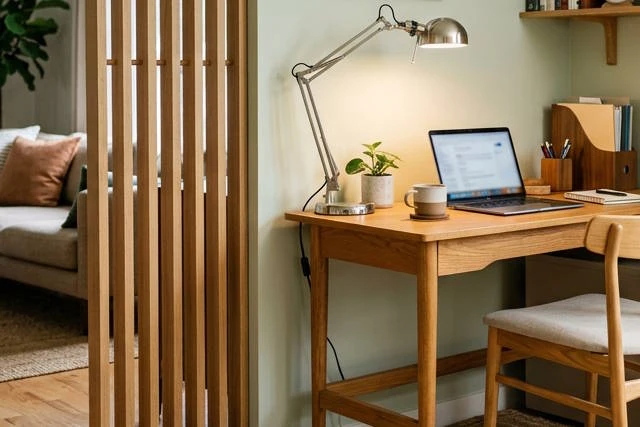
Many homes don't have a separate room dedicated to work‚ so the work corner is located in a shared space. In that case you can create a visual boundary that separates the work area from the rest of the room. A rug‚ a shelf or a light partition can define the area more clearly. The visual boundary helps the brain understand when work is happening and when other home activities are taking place. This kind of separation also helps you feel calm when the workday ends.
Keeping a Daily Routine at the End of the Workday
Even when a work corner is well planned‚ it is important to keep a regular routine at the end of the workday. Putting documents away‚ shutting down the computer and returning items to their places can mark a clear transition between work and personal time. When these actions are done regularly‚ the work area stays organized and does not spread to other parts of the home. This habit helps keep clear boundaries between different areas of life. That way the home remains a place for both rest and professional work.
Summary
A home office corner can fit pleasantly into the home when it is planned thoughtfully and clearly. Defining a fixed area‚ choosing suitable furniture and creating organized storage help keep boundaries between work and personal life. When the work area stays contained and organized‚ the home doesn't lose its sense of calm. Good planning makes it possible to combine both worlds in a balanced way.